What you control — and what you don't
- You choose: the stake, how long you play, whether to use the bonus buy and when to stop.
- You don't choose: where the Scatters land, how many fish show up, or whether the Fisherman arrives.
Sizing your stake
Big Bass Splash is high volatility. Most of the value sits in Free Spins, which start on average about once in 110–115 spins — and gaps of several hundred spins happen. A simple rule: pick a stake that lets your budget cover at least 200–300 spins. With 50 to play with, that means 0.20 or less per spin.
| Budget | Stake for ~250 spins |
|---|---|
| 20 | 0.10 (200 spins) |
| 50 | 0.20 |
| 100 | 0.40 |
| 250 | 1.00 |
The bonus buy
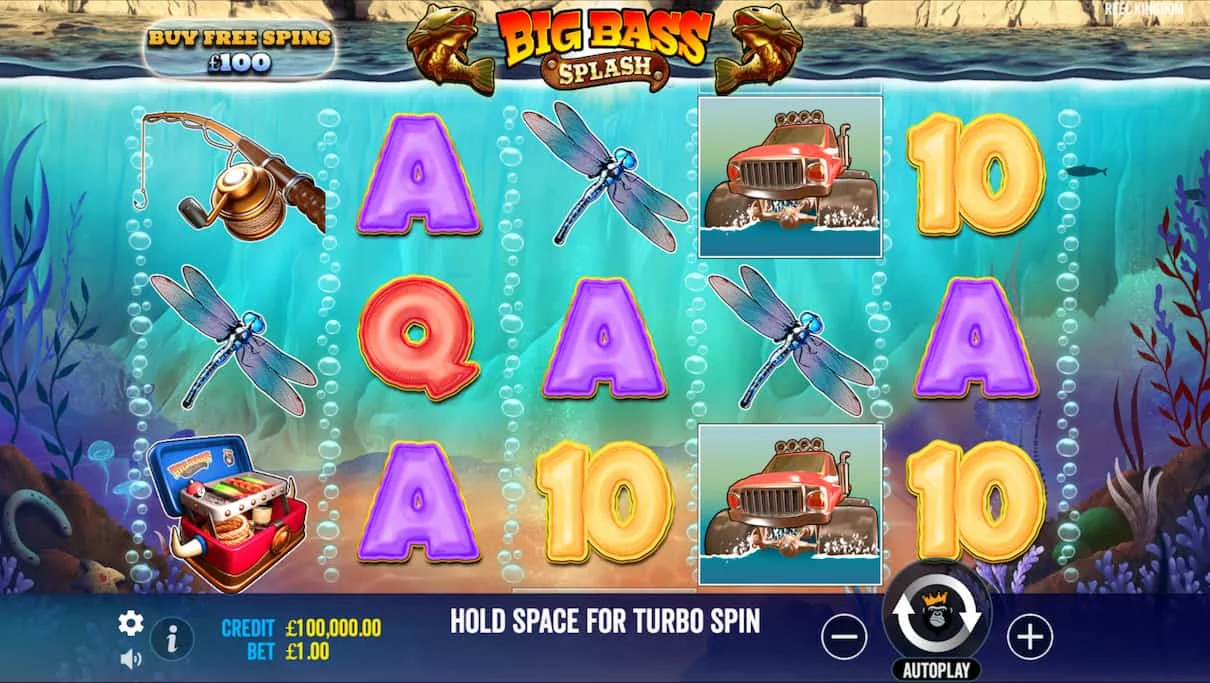
Where it's offered, Buy Free Spins costs 100× the bet. It doesn't improve the RTP — it just swaps a long wait for one expensive shot. Many bought bonuses return less than their price, because the Fisherman needs fish on the same spin to pay well. Treat a buy as a single high-risk bet, and never use it to chase earlier losses.
What 96.71% RTP means
RTP is a long-run average over millions of spins. Over one evening your result can be far above or below it. Also check which version your casino runs — 95.67% and 94.60% versions exist, and the rules screen in the game tells you.
Mistakes to avoid
- Raising the stake after a dry spell. The game has no memory; the bonus isn't "due".
- Judging the game on 30 spins. In a high-volatility slot that tells you almost nothing.
- Ignoring the RTP version. The same game can return several percent less at another casino.
- Buying bonuses back to back. At 100× each, a budget disappears fast.
- Forgetting the cap. Wins stop at 5,000× the bet.
A sensible session plan
- Spin the free demo first to see a full Free Spins round.
- Set a budget and a stake that covers 200+ spins.
- Decide in advance when you'll stop — after a win target or when the budget is gone.
- Take breaks; use the casino's time and deposit limits.
If playing stops being fun, read our responsible gambling page.